
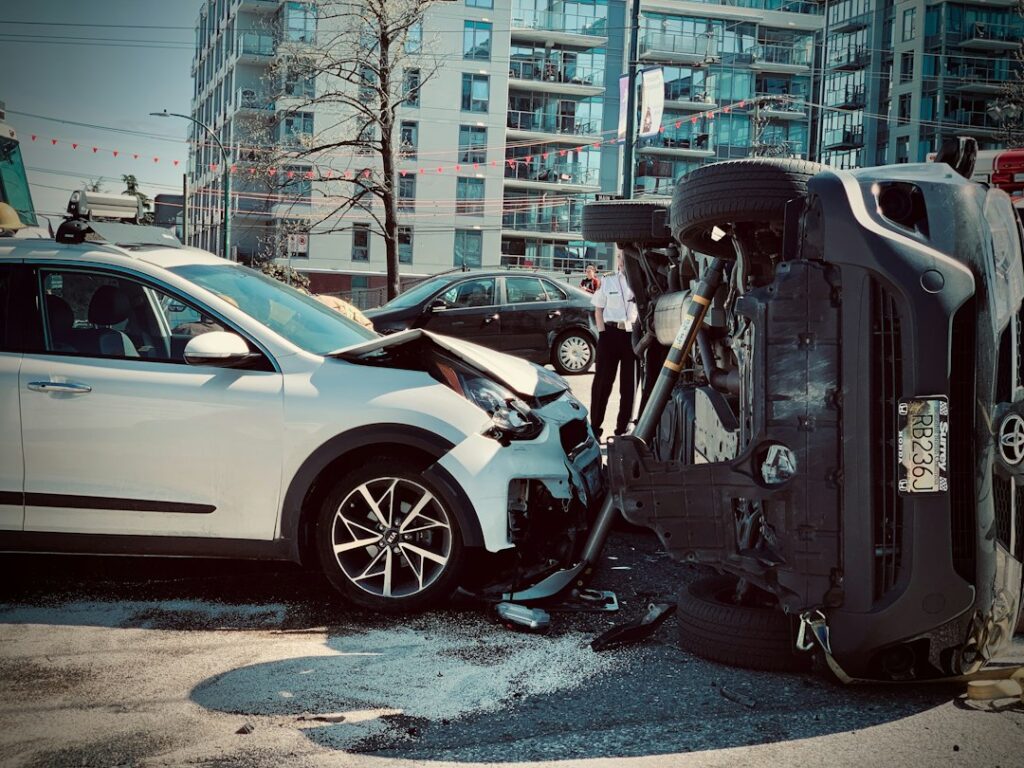
What should you do immediately after a crash?
After a collision, protect people first, document the scene, and avoid making statements about fault. Insurance decisions can wait until everyone is safe.
If anyone is injured, call 911 and request medical assistance. Move to a safe location if the vehicles can be moved without creating more danger. Tennessee guidance allows drivers in a minor, non-injury crash to move vehicles out of active traffic when possible, which can reduce the risk of a second collision.
At the scene:
- Turn on hazard lights and use warning devices if available.
- Do not leave unless emergency conditions require it.
- Exchange information with the other driver.
- Ask witnesses for their names and contact information.
- Cooperate with the investigating officer.
- Do not argue about who caused the crash.
- Do not promise to pay for repairs or medical bills.
On winding roads, narrow shoulders, and routes affected by rain, ice, or limited visibility, standing near a disabled vehicle can be especially dangerous. Stay away from traffic whenever possible.
What information should you collect?
A police report is useful, but it may not contain everything an insurance company needs. Collect your own information before leaving the scene if doing so is safe.
Record:
- Names, phone numbers, and addresses of all drivers
- Driver license numbers
- Vehicle owners’ names if different from the drivers
- License plate numbers
- Vehicle makes, models, and identifying details
- Insurance company names and policy numbers
- Names and contact information for witnesses
- The investigating agency, officer’s name, and report number
Take photographs of the vehicles from several angles. Include close-ups of damage and wider pictures showing the roadway, traffic signs, lane markings, weather, lighting, debris, and where the vehicles came to rest. Photograph visible injuries only if the injured person agrees and the image is appropriate for documentation.
Avoid posting scene photographs or opinions about the collision on social media. A casual statement such as “I should have stopped sooner” can be misunderstood when a claim is being reviewed.
Should you report the accident to your insurance company?
Yes. Notify your insurance company as soon as reasonably possible, even if you believe the other driver was responsible or the damage appears minor.
Most policies require prompt notice of an accident. Early reporting allows the insurer to inspect damage, preserve evidence, arrange an appraisal, and determine which coverage may apply. Reporting a claim does not automatically mean the insurer has decided that you were at fault.
Provide a factual account:
- When and where the crash occurred
- Which vehicles were involved
- Whether anyone was injured
- What the investigating officer did
- What damage is visible
- Whether the vehicle is safe to drive
Do not guess about speed, distance, or the cause of the crash. If you do not know, say that you do not know. Keep notes of every call, including the date, representative’s name, claim number, and what was discussed.
What if the other driver caused the collision?
You may pursue a claim against the other driver’s liability coverage, but the other insurer will investigate responsibility and damages. A police citation or report can be helpful, but it does not always settle every insurance question.
Depending on the circumstances and your policy, your own collision coverage may address vehicle damage while responsibility is reviewed. A deductible may apply initially. If the other driver is uninsured or does not have enough coverage, uninsured or underinsured motorist coverage may become relevant if included in your policy.
Ask the claims representative to explain:
- Which coverage is being used
- Whether a deductible applies
- How fault is being evaluated
- Whether medical payments or uninsured-motorist coverage may apply
- What documentation is still needed

The answer depends on the policy language and facts of the crash.
What should you do about injuries?
Some injuries do not become obvious until hours or days after a crash. Seek medical care for pain, dizziness, numbness, headaches, confusion, or other symptoms. Emergency symptoms should be addressed immediately.
Tell the insurance company about reported injuries, but do not minimize symptoms to make the claim seem simpler. Keep copies of medical records, bills, prescriptions, mileage, and work-loss documentation.
Health insurance, medical payments coverage, liability coverage, and uninsured-motorist coverage can interact differently. Do not assume that the vehicle claim and injury claim follow the same process.
How does vehicle damage get handled?
Do not authorize major repairs before the insurer has had a reasonable opportunity to inspect the vehicle, unless temporary work is needed to prevent further damage or protect safety.
You generally may have choices about where repairs are performed. Ask whether the insurer requires an inspection, whether a repair facility can send an estimate directly, and how supplemental damage will be handled if additional problems are found after disassembly.
Keep receipts for:
- Towing and storage
- Temporary transportation
- Emergency repairs
- Rental vehicles
- Personal property removed from the vehicle
If the vehicle may be a total loss, ask how the valuation was calculated. The insurer may consider comparable vehicles, mileage, condition, equipment, taxes, and other factors. Remove personal belongings and preserve maintenance records, purchase documents, and photographs showing the vehicle’s condition before the crash.
Are there Tennessee reporting requirements beyond calling the police?
Possibly. The investigating officer may explain whether additional paperwork is required. Tennessee has owner or driver reporting requirements for certain reportable crashes, and the timing can matter. Ask the officer or insurance representative whether an additional report must be filed and keep proof that it was submitted.
A crash report can usually be obtained from the agency that investigated the collision. The correct agency may be the Tennessee Highway Patrol, a sheriff’s office, or a municipal law-enforcement department, depending on where the crash occurred.
What if the claim is delayed, denied, or disputed?
Request the reason in writing and compare it with the policy language. Keep all estimates, photographs, medical records, correspondence, and call notes in one file.
If communication breaks down, ask for a claim supervisor or the insurer’s formal review process. Tennessee’s Department of Commerce and Insurance also provides consumer assistance for insurance complaints and claim disputes. That process does not replace urgent medical care or legal deadlines, but it can help identify whether an insurance company or agent is handling a matter improperly.
A serious injury, disputed liability, significant property damage, or a request to sign a release deserves careful attention before any settlement is accepted. A signed release may limit later claims, especially if symptoms or repair problems develop afterward.
What should you keep in your vehicle before an accident?
A small emergency folder can make the claims process easier. Keep an insurance identification card, registration information, emergency contacts, a phone charger, and a pen. After a crash, use the phone’s notes application to record the time, road conditions, witness information, and claim number.
For households traveling through changing weather or rural stretches, it is also sensible to carry a flashlight, reflective clothing, basic first-aid supplies, and warning triangles. These items do not replace emergency services, but they can improve visibility while waiting for help.
